

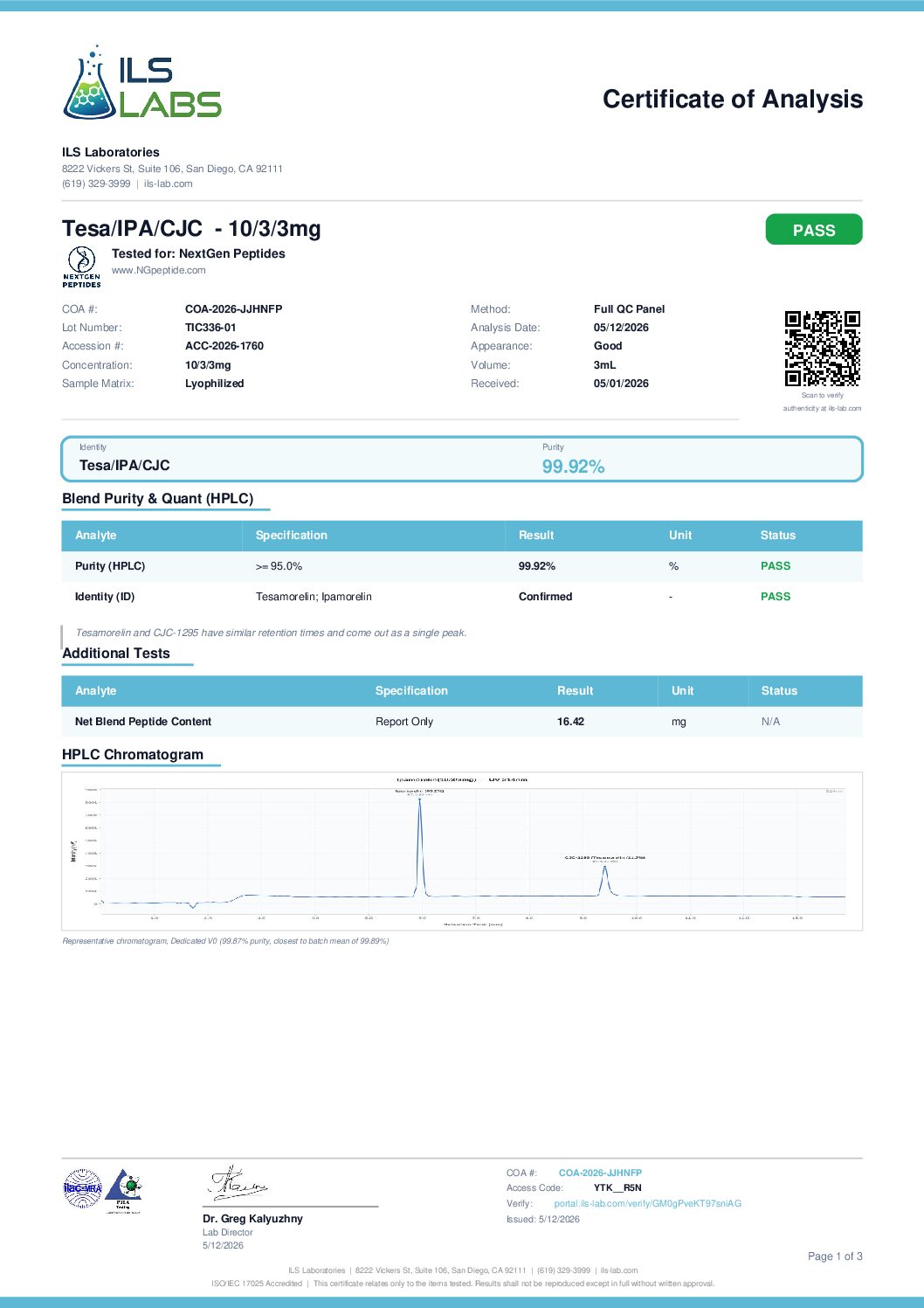
Tesa / IPA / CJC 6/3/3 MG Blend: Research Overview and Laboratory Information (USA)
The Tesa / IPA / CJC 6/3/3 MG Blend is a multi-peptide research formulation frequently examined in endocrinology, peptide signaling studies, and growth hormone pathway investigations. This blend combines Tesamorelin, Ipamorelin, and CJC-related signaling activity into a research framework designed to study interactions within the growth hormone axis and broader endocrine communication systems.
In laboratory and scientific research environments, peptide combinations are commonly evaluated because biological signaling rarely occurs through a single pathway. Researchers in the United States and internationally continue exploring how multiple peptide compounds interact in experimental models involving hormonal signaling, metabolic regulation, and cellular communication systems.
This formulation is intended strictly for laboratory and scientific research use only and is not approved for human consumption, medical treatment, or therapeutic application.
What Is the Tesa / IPA / CJC Blend?
The Tesa / IPA / CJC blend combines three compounds frequently studied in growth hormone research:
Tesamorelin is a synthetic analog associated with growth hormone–releasing hormone signaling research.
Ipamorelin is a selective growth hormone secretagogue investigated for receptor-specific activity involving growth hormone pathways.
CJC peptides are commonly studied for interactions involving pituitary signaling and hormone regulation.
In laboratory studies, blends of this type are often researched for:
- Growth hormone axis pathway investigations
- Hormonal signaling interactions
- Endocrine communication studies
- Metabolic pathway research
- Cellular signaling systems
- Experimental hormone pulsatility models
Researchers use combination models to study how multiple pathways influence biological responses.
Scientific and Research Applications
Tesa / IPA / CJC 6/3/3 MG blends are used exclusively in controlled laboratory environments.
Research applications frequently include:
- Growth hormone signaling pathway analysis
- Endocrine system investigations
- Hormonal communication studies
- Cellular pathway interaction research
- Protein signaling analysis
- Experimental metabolic regulation models
Researchers often compare multi-compound systems with single-peptide studies to understand broader signaling interactions.
Why Researchers Study Multi-Peptide Systems
Biological systems involve complex networks where signaling molecules influence each other simultaneously. Multi-peptide research allows investigators to observe interactions that may not appear in isolated models.
Researchers frequently explore:
- Endocrine signaling pathways
- Hormone communication systems
- Metabolic regulation networks
- Feedback-loop mechanisms
- Cellular receptor interactions
- Signal amplification processes
Combination-based studies help provide a more complete picture of biological communication.
Mechanism of Action (Research Context)
In laboratory environments, Tesa / IPA / CJC systems are studied according to how each component interacts with receptors and signaling pathways.
Research observations often examine:
- Growth hormone–related signaling activity
- Pituitary communication pathways
- Hormonal timing and pulsatility patterns
- Cellular receptor interactions
- Endocrine regulatory systems
These findings remain limited to controlled research settings and should not be interpreted as established clinical outcomes.
Growth Hormone Axis Research
The growth hormone axis represents one of the most frequently studied endocrine systems in peptide science.
Researchers investigate:
- Hypothalamic signaling pathways
- Pituitary communication systems
- Hormone release patterns
- Biological feedback systems
- Metabolic signaling interactions
Peptide combinations can help researchers study broader endocrine relationships.
Why Peptide Blend Research Continues to Expand
Research involving peptide blends continues to grow because combination systems may reveal interactions not seen in isolated compounds.
Scientific interest frequently includes:
- Multi-pathway signaling research
- Receptor interaction studies
- Hormonal communication analysis
- Cellular coordination systems
- Systems biology investigations
Peptide research remains a rapidly developing area of molecular science.
Multi-Peptide Blends vs Single-Peptide Research
Multi-Peptide Research Systems
- Examine multiple signaling pathways
- Investigate pathway interactions
- Model broader biological systems
- Support systems-level research approaches
Single-Peptide Research Models
- Focus on isolated pathways
- Simplify mechanistic interpretation
- Reduce experimental variables
- Offer targeted pathway analysis
Both approaches contribute important information within laboratory studies.
Scientific Research Areas
Tesa / IPA / CJC research intersects with multiple scientific fields:
- Endocrinology
- Molecular biology
- Metabolic science
- Peptide signaling research
- Hormone pathway studies
- Cellular communication systems
Advances in laboratory technologies continue expanding peptide research opportunities.
Laboratory Handling and Storage
Proper handling practices help support consistency and research quality.
Suggested procedures include:
- Store under appropriate laboratory conditions
- Avoid prolonged heat exposure
- Maintain sterile handling methods
- Use professional laboratory equipment
- Prevent contamination during preparation
- Follow institutional protocols
Careful handling contributes to reproducible outcomes.
Research Quality Standards
Research materials frequently undergo quality procedures to support reliability.
Common standards include:
- Analytical verification testing
- Batch consistency monitoring
- Documentation systems
- Controlled manufacturing procedures
- Standardized handling protocols
Quality systems help support experimental reproducibility.
Regulatory Notice
Tesa / IPA / CJC 6/3/3 MG is intended strictly for laboratory and scientific research purposes only. It is not approved by the FDA for human consumption, treatment, or therapeutic use.
This information is provided solely for educational and research reference purposes.
Summary
The Tesa / IPA / CJC 6/3/3 MG Blend is a multi-peptide research formulation studied in controlled environments for its role in endocrine signaling, growth hormone pathway investigations, and cellular communication research.
Ongoing studies continue exploring how peptide interactions influence broader biological systems and signaling networks.



Reviews
There are no reviews yet.