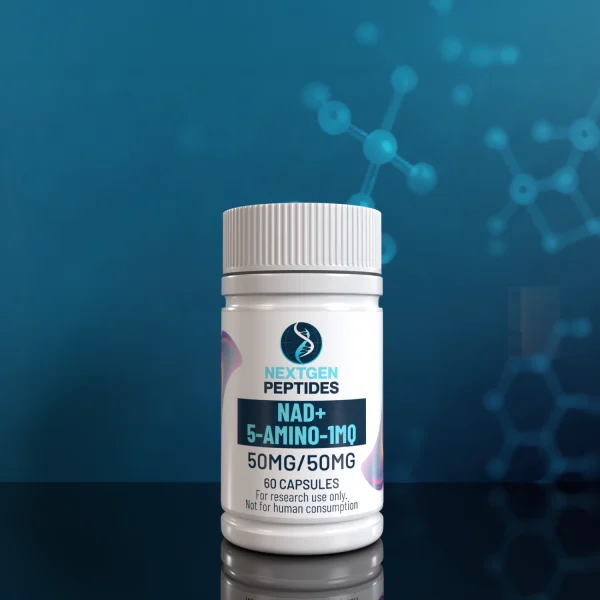
NAD+ and 5-Amino-1MQ (50 mg): Research Overview and Laboratory Information (USA)
NAD+ (Nicotinamide Adenine Dinucleotide) and 5-Amino-1MQ are two compounds widely studied in metabolic science, cellular energy research, and mitochondrial biology. In scientific and laboratory environments, these compounds are often examined for their roles in energy metabolism, cellular signaling pathways, and enzyme regulation systems.
Researchers in the United States and globally continue to explore NAD+ and 5-Amino-1MQ individually and in comparative studies to better understand how cellular energy production, metabolic regulation, and enzymatic activity are influenced at the molecular level.
These compounds are strictly intended for laboratory and scientific research use only and are not approved for human consumption, medical treatment, or therapeutic use.
What Is NAD+?
NAD+ is a naturally occurring coenzyme found in all living cells. It plays a central role in energy metabolism and is essential for redox reactions that convert nutrients into cellular energy.
In laboratory research, NAD+ is commonly studied for:
- Cellular energy production (ATP metabolism)
- Mitochondrial function and bioenergetics
- DNA repair and genomic stability pathways
- Oxidative stress and antioxidant response systems
- Sirtuin enzyme activation and aging research
- Metabolic regulation and cell signaling
Because of its fundamental role in energy production, NAD+ is one of the most widely studied molecules in cellular biology and aging research.
What Is 5-Amino-1MQ?
5-Amino-1MQ is a synthetic research compound studied for its potential role in metabolic regulation and enzyme inhibition pathways. It has gained attention in scientific research due to its interaction with nicotinamide-related metabolic pathways.
In laboratory settings, 5-Amino-1MQ is commonly studied for:
- NAD-related metabolic pathway modulation
- Cellular energy balance research
- Fat metabolism and lipid regulation studies
- Enzyme activity and inhibition research
- Mitochondrial efficiency and function models
- Metabolic signaling pathway investigations
Researchers use 5-Amino-1MQ in experimental models focused on metabolic regulation and energy homeostasis.
Scientific and Research Applications
The combination of NAD+ and 5-Amino-1MQ is of interest in metabolic and mitochondrial research due to their involvement in cellular energy pathways and enzyme regulation systems.
Key research applications include:
- Mitochondrial energy production studies
- Cellular metabolism and ATP synthesis research
- NAD-related enzyme pathway analysis
- Metabolic signaling and regulatory system modeling
- Oxidative stress response research
- Cellular aging and longevity pathway studies
These compounds are used strictly in controlled laboratory environments for experimental research purposes.
Why NAD+ and 5-Amino-1MQ Are Studied Together
NAD+ and 5-Amino-1MQ are often discussed in metabolic research because they are both connected to cellular energy regulation pathways, particularly those involving nicotinamide metabolism.
Researchers often explore their relationship in terms of:
- NAD+ metabolic cycling and regulation
- Enzyme activity related to nicotinamide pathways
- Cellular energy efficiency and mitochondrial output
- Fat metabolism and lipid utilization systems
- Oxidative stress and cellular resilience models
This makes the combination useful in advanced metabolic and mitochondrial research studies.
Mechanism of Action (Research Context)
In laboratory models, NAD+ functions as a critical coenzyme in redox reactions, while 5-Amino-1MQ is studied for its role in modulating nicotinamide-related metabolic pathways.
Key research observations include:
- NAD+ involvement in electron transfer reactions
- Regulation of cellular energy production pathways
- 5-Amino-1MQ interaction with metabolic enzyme systems
- Influence on NAD recycling and utilization pathways
- Support of mitochondrial function and efficiency studies
These mechanisms are strictly studied in controlled scientific environments and are not confirmed for clinical use.
Why This Combination Is Popular in Research
The NAD+ and 5-Amino-1MQ combination is frequently studied in metabolic and mitochondrial research due to its relevance in energy production and cellular regulation systems.
Researchers explore it in relation to:
- Cellular energy metabolism efficiency
- Mitochondrial performance and regulation
- Aging-related metabolic pathway studies
- Oxidative stress resistance models
- Enzyme activity and NAD-dependent processes
- Fat metabolism and energy balance research
Its role in fundamental cellular energy systems makes it a key subject in biochemical research.
NAD+ vs 5-Amino-1MQ (Research Comparison)
NAD+
- Naturally occurring coenzyme in all cells
- Central role in energy production and metabolism
- Essential for redox reactions and DNA repair
- Widely studied in aging and mitochondrial research
5-Amino-1MQ
- Synthetic research compound
- Studied for metabolic enzyme modulation
- Focus on nicotinamide pathway regulation
- Investigated in fat metabolism and energy balance studies
Together, they are often studied in complementary metabolic research models.
Scientific Research Context
NAD+ and 5-Amino-1MQ are part of a broader category of metabolic and mitochondrial research compounds studied in cellular biology and biochemical science.
Areas of scientific interest include:
- Mitochondrial energy metabolism and ATP production
- Cellular aging and longevity research models
- Enzyme regulation and nicotinamide pathways
- Oxidative stress and antioxidant defense systems
- Metabolic flexibility and energy balance studies
- Cellular repair and regeneration signaling
Ongoing research continues to explore how these compounds influence energy regulation at the molecular level.
Laboratory Handling and Storage
Proper handling is essential for maintaining stability and research accuracy.
Recommended guidelines include:
- Store in a cool, dry environment
- Avoid exposure to heat and sunlight
- Maintain sterile laboratory conditions
- Use research-grade equipment and protocols
- Prevent contamination during handling
- Follow standard peptide storage procedures
These practices help ensure sample integrity in laboratory research environments.
Research Quality Standards
In scientific supply environments, consistency and verification are critical for reproducible research outcomes.
Key quality standards include:
- Verified compound purity and composition analysis
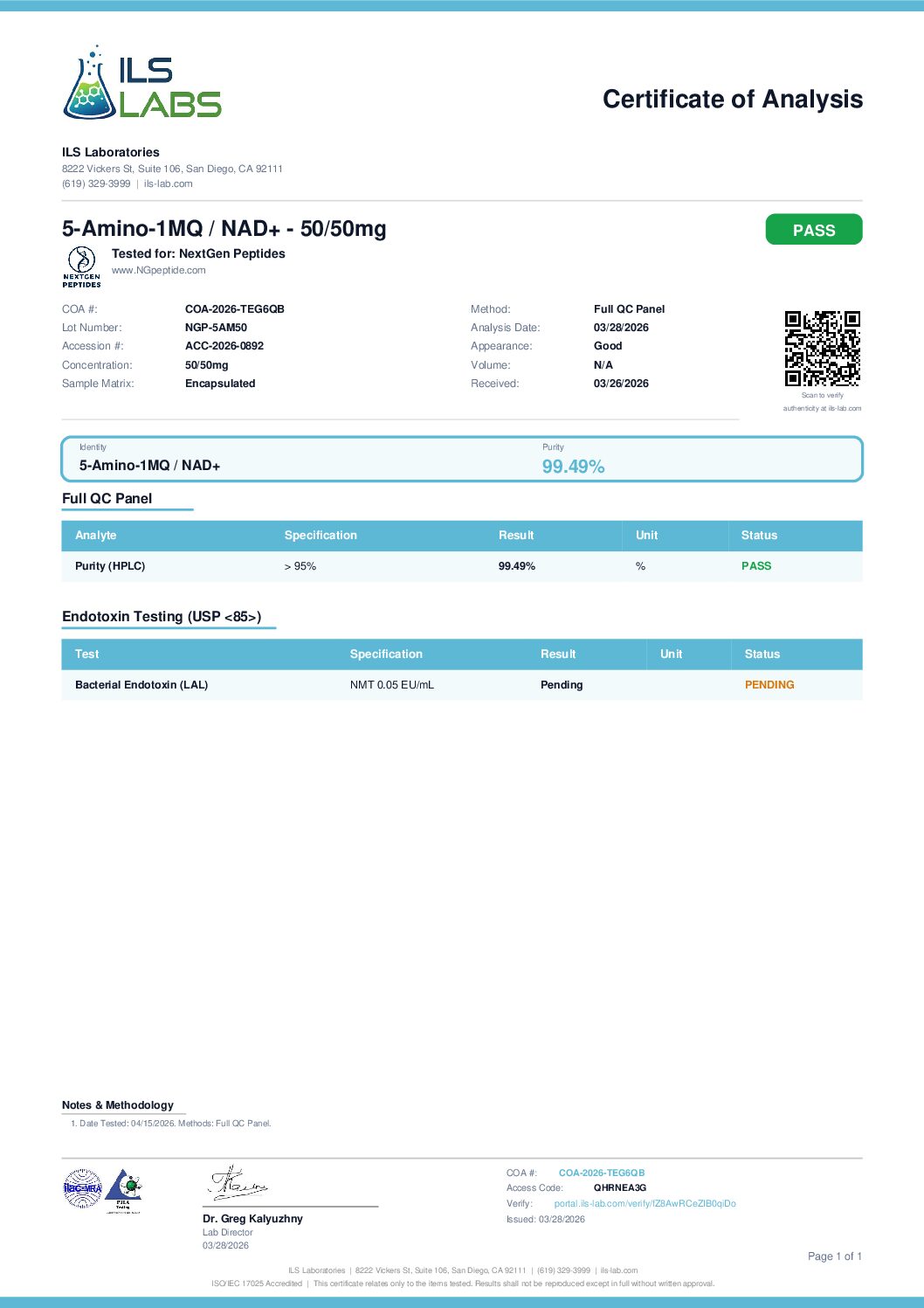
- Third-party testing and COA documentation
- Batch-to-batch consistency for research reliability
- Controlled manufacturing processes
- Secure and compliant distribution systems
These standards ensure accuracy and reliability in metabolic research studies.
Regulatory Notice
NAD+ and 5-Amino-1MQ are intended strictly for laboratory and scientific research purposes only. They are not approved by the FDA for human consumption, medical treatment, or therapeutic use.
All information provided is for educational and research reference within controlled laboratory environments.
Summary
NAD+ and 5-Amino-1MQ are widely studied in metabolic and mitochondrial research for their roles in cellular energy production, enzyme regulation, and nicotinamide-related pathways. Their involvement in fundamental metabolic processes makes them important subjects in modern biochemical and energy metabolism research.
Ongoing scientific investigation continues to explore their effects on mitochondrial function, cellular energy balance, and metabolic regulation in controlled laboratory settings.
Reviews
There are no reviews yet.