

MOTS-C: Research Overview and Laboratory Information (USA)
MOTS-C is a mitochondrial-derived peptide that has attracted significant scientific interest in metabolic biology, cellular energy regulation, and mitochondrial signaling research. It is encoded within mitochondrial DNA and is studied in laboratory environments for its potential role in regulating metabolic homeostasis, energy balance, and cellular stress response pathways.
Researchers in the United States and worldwide continue to investigate MOTS-C as part of broader studies on mitochondrial function, metabolic adaptation, and peptide-mediated signaling systems. Because of its unique origin within the mitochondria, MOTS-C is considered an important subject in modern research exploring the connection between cellular energy production and metabolic regulation.
This compound is strictly intended for laboratory and scientific research use only and is not approved for human consumption, medical treatment, or therapeutic application.
What Is MOTS-C?
MOTS-C is a 16-amino-acid peptide encoded by mitochondrial DNA. Unlike nuclear-encoded peptides, it originates directly from the mitochondria, the energy-producing structures within cells. This makes it a unique focus of research in metabolic science and cellular bioenergetics.
In laboratory studies, MOTS-C is commonly investigated for:
- Mitochondrial signaling and energy regulation pathways
- Cellular metabolism and glucose utilization research
- Fat metabolism and lipid oxidation studies
- Insulin sensitivity and metabolic homeostasis models
- Exercise adaptation and cellular stress response research
- Gene expression and metabolic signaling pathways
Because of its mitochondrial origin, MOTS-C is widely studied in energy metabolism and longevity-related biological research.
Scientific and Research Applications
MOTS-C is used exclusively in controlled laboratory environments for experimental purposes. It is not intended for medical or therapeutic use outside regulated scientific studies.
Key research applications include:
- Mitochondrial energy metabolism research
- Cellular stress response and adaptation studies
- Glucose metabolism and insulin signaling pathways
- Fat oxidation and lipid regulation models
- Exercise physiology and endurance-related research
- Cellular aging and longevity pathway studies
Researchers use MOTS-C to better understand how mitochondrial peptides influence whole-body metabolic regulation and energy balance systems.
Why MOTS-C Is Studied in Research
MOTS-C has gained significant attention due to its unique role as a mitochondria-encoded signaling peptide. Unlike many metabolic compounds, it is directly linked to mitochondrial communication and cellular energy regulation.
Researchers often study MOTS-C in relation to:
- Metabolic flexibility and energy adaptation
- Cellular endurance and stress resistance mechanisms
- Insulin sensitivity and glucose regulation pathways
- Mitochondrial biogenesis and function
- Age-related metabolic decline and cellular signaling
Its mitochondrial origin makes it especially relevant in longevity and metabolic science research.
Mechanism of Action (Research Context)
In laboratory models, MOTS-C is believed to influence cellular metabolism by interacting with nuclear gene expression and energy-regulating pathways. It is studied for its ability to act as a signaling molecule between mitochondria and the nucleus.
Key observed research mechanisms include:
- Regulation of AMPK-related metabolic pathways
- Influence on glucose uptake and utilization systems
- Modulation of cellular energy balance signals
- Interaction with mitochondrial stress response pathways
- Gene expression regulation linked to metabolic adaptation
These mechanisms are studied strictly in controlled research environments and are not confirmed for therapeutic use.
Why MOTS-C Is Popular in Scientific Research
MOTS-C continues to grow in popularity within metabolic and mitochondrial research due to its unique biological origin and broad metabolic effects observed in experimental models.
Researchers frequently explore MOTS-C in relation to:
- Metabolic disease modeling
- Exercise physiology and endurance research
- Mitochondrial dysfunction studies
- Aging and cellular longevity research
- Energy regulation and metabolic flexibility
- Nutrient sensing and cellular adaptation pathways
Its connection to mitochondrial DNA makes it especially valuable in advanced metabolic science.
MOTS-C vs Traditional Metabolic Research Compounds
is distinct from traditional metabolic research compounds because it originates from mitochondrial DNA rather than being synthesized as a conventional signaling molecule.
Traditional Metabolic Compounds
- Often act through single receptor pathways
- Focus on isolated metabolic mechanisms
- External synthetic or pharmacological origin
(Mitochondrial Peptide)
- Endogenous mitochondrial origin
- Broad metabolic signaling influence
- Gene expression and energy regulation roles
- Integrated cellular communication functions
This makes MOTS-C a unique focus in mitochondrial and metabolic research.
Scientific Research Context
MOTS-C is part of a growing category of mitochondrial-derived peptides being studied in cellular biology, metabolic science, and aging research.
Areas of scientific interest include:
- Mitochondrial communication and signaling
- Cellular energy regulation and ATP production
- Metabolic adaptation and stress resistance
- Insulin signaling and glucose homeostasis
- Exercise-induced metabolic changes
- Aging-related mitochondrial function decline
Ongoing research continues to explore how mitochondrial peptides influence systemic metabolic health at the cellular level.
Laboratory Handling and Storage
Proper handling is essential to maintain peptide stability and research accuracy in laboratory environments.
Recommended guidelines include:
- Store in a cool, dry environment
- Protect from direct sunlight and heat exposure
- Maintain sterile laboratory conditions
- Use appropriate research-grade handling equipment
- Avoid contamination during preparation and use
- Follow standard peptide storage protocols
Proper storage ensures sample integrity in scientific research applications.
Quality Standards in Research Use
In laboratory supply environments, consistency and verification are essential for reproducible research outcomes.
Key quality standards include:
- Verified peptide purity and composition analysis
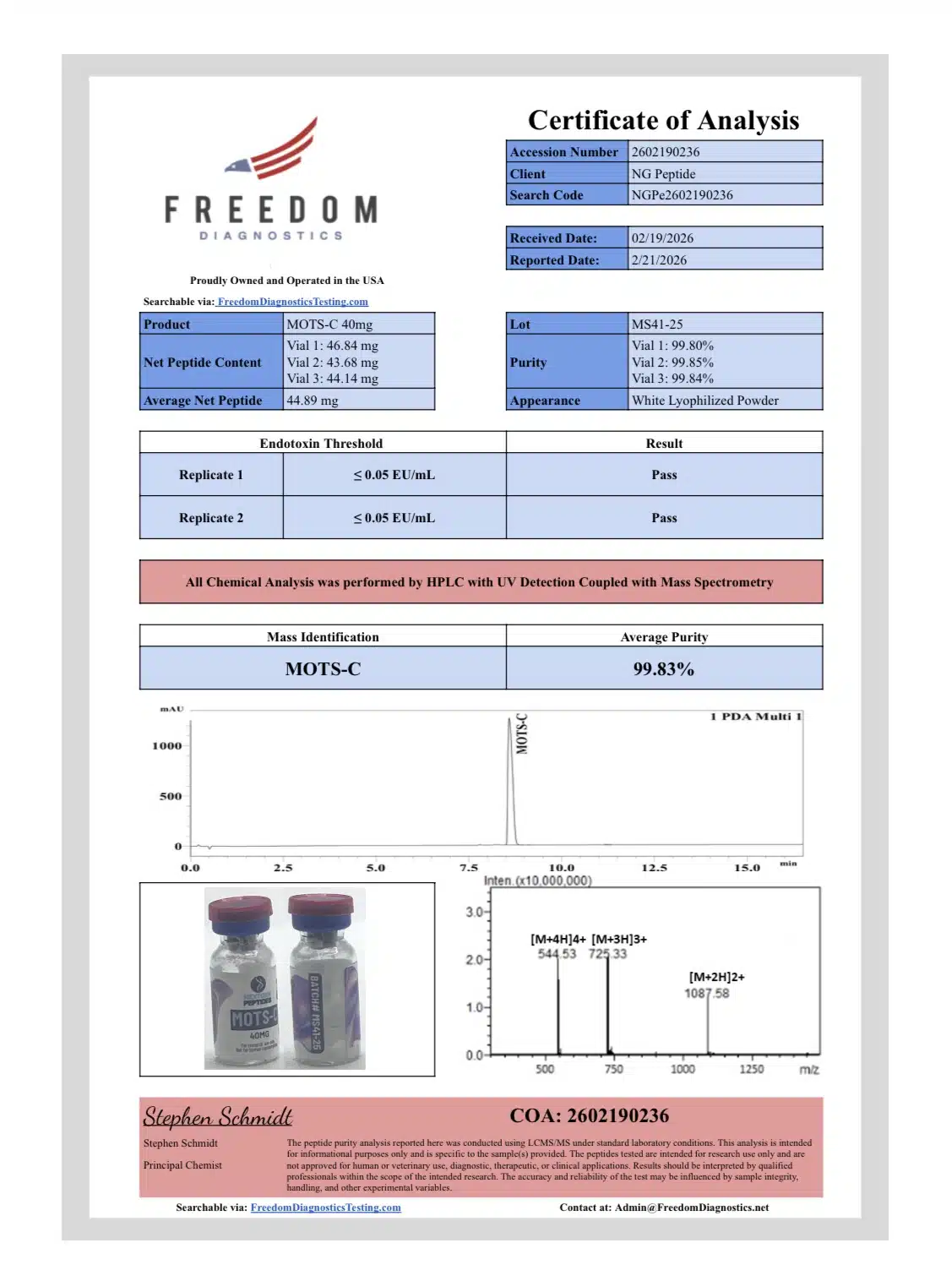
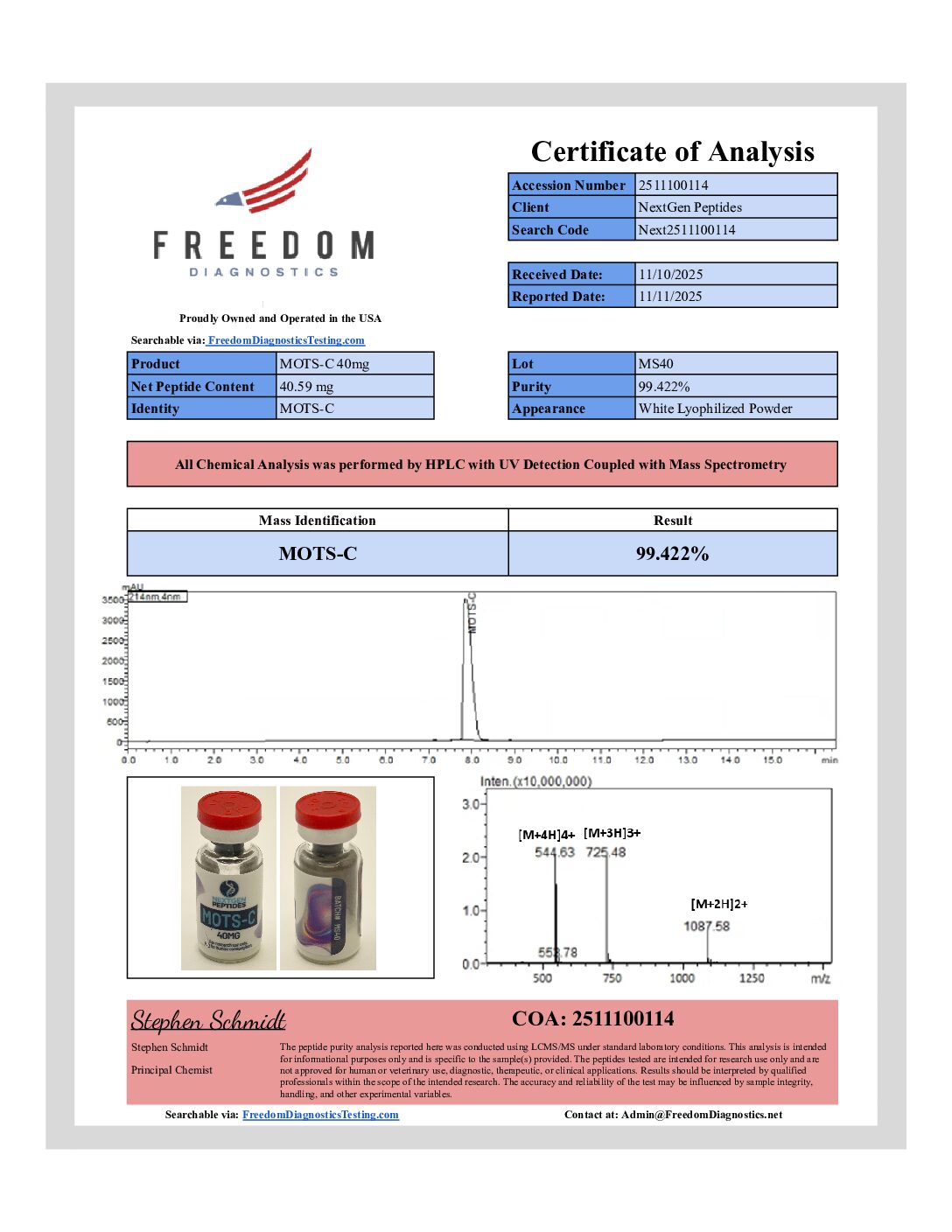
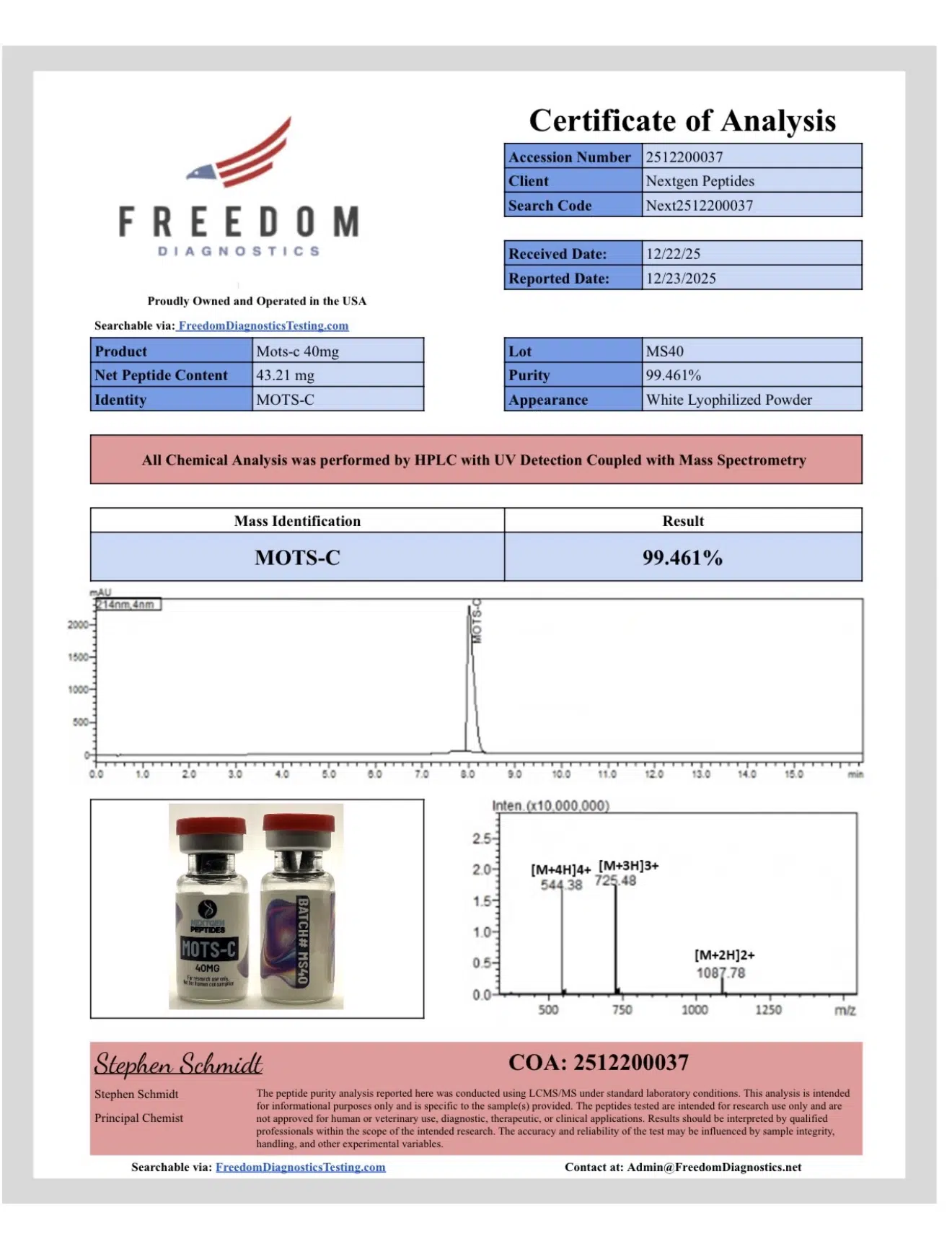
- Third-party testing and documentation (COA)
- Batch-to-batch consistency for reproducibility
- Controlled manufacturing processes
- Secure and compliant distribution systems
These standards support reliable outcomes in mitochondrial peptide research.
Regulatory Notice
is intended strictly for laboratory and scientific research purposes only. It is not approved by the FDA for human consumption, medical treatment, or therapeutic use.
All information provided is for educational and research reference within controlled laboratory environments only.
Summary
is a mitochondrial-derived peptide widely studied in metabolic science for its role in energy regulation, cellular stress response, and mitochondrial signaling pathways. Its unique origin within mitochondrial DNA makes it a key focus in research exploring metabolism, aging, and cellular communication.
Ongoing scientific studies continue to investigate how MOTS-C influences energy balance, metabolic adaptation, and mitochondrial function in controlled laboratory settings.



Reviews
There are no reviews yet.