
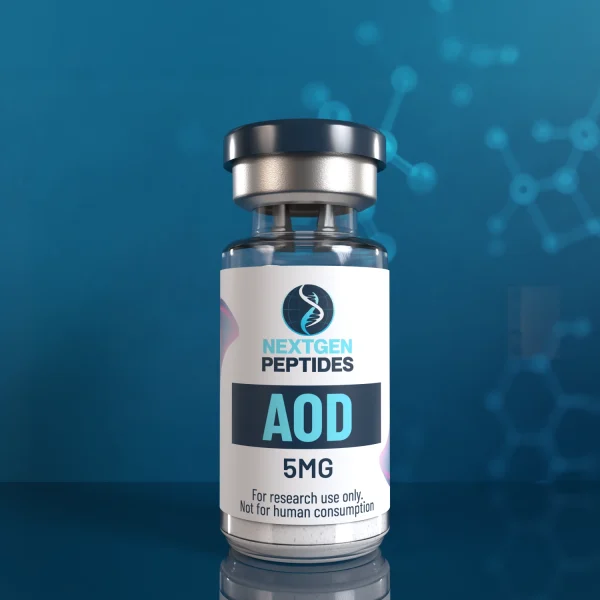
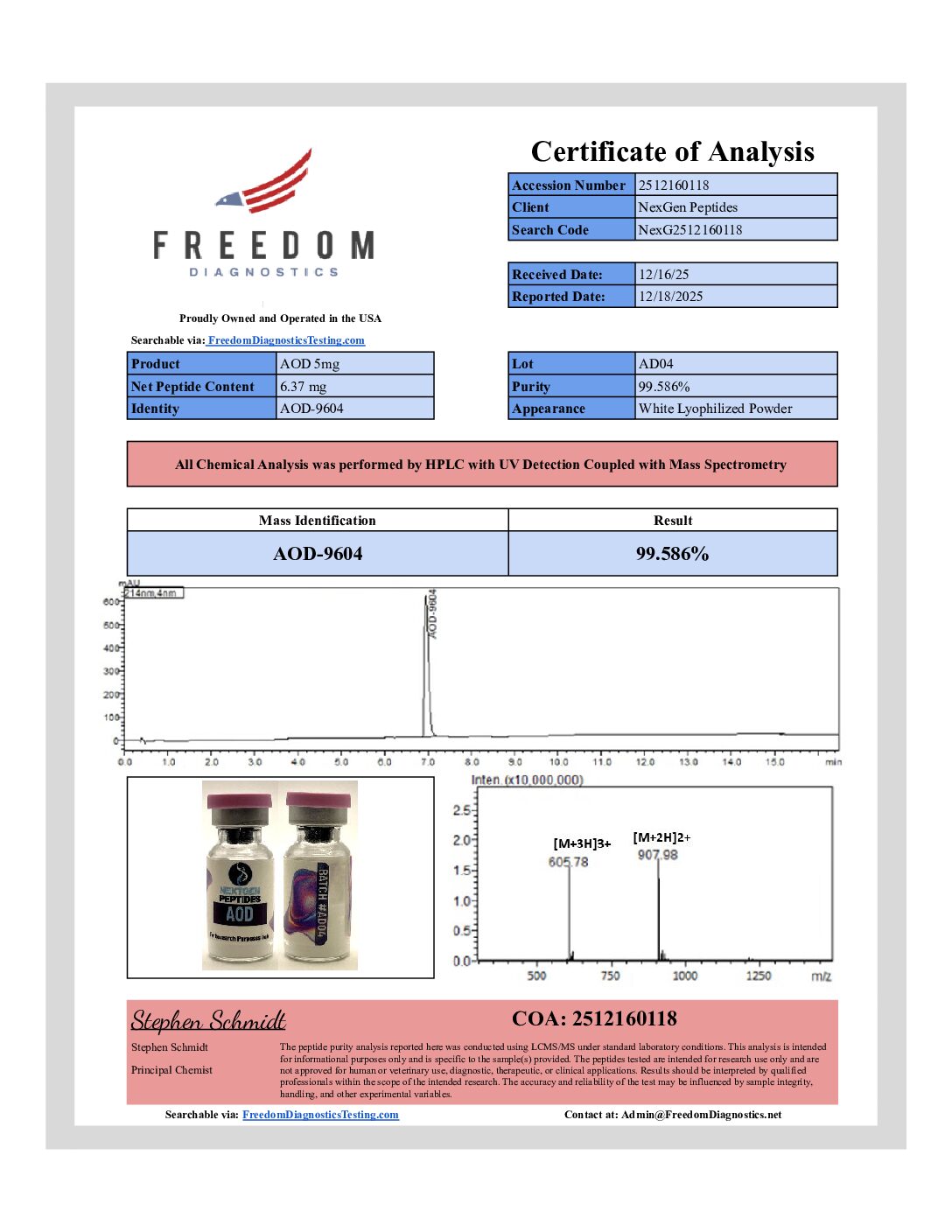
AOD-9604 (5MG, 10 Vials): Research Overview and Laboratory Information (USA)
AOD-9604, commonly identified as Growth Hormone Fragment 176–191, is a synthetic peptide studied in metabolic science, adipose tissue biology, and cellular energy research. Derived from a specific region of human growth hormone (HGH), this peptide fragment has attracted scientific interest because researchers investigate it separately from full growth hormone signaling pathways. In laboratory environments, AOD-9604 is frequently explored for its role in lipid metabolism, adipocyte signaling, and energy regulation systems.
Across research facilities in the United States and internationally, AOD-9604 is evaluated in controlled studies involving fat metabolism pathways, cellular signaling, and metabolic processes. Interest in peptide-based metabolic research has continued to expand due to advances in molecular biology and endocrine science.
This material is intended strictly for laboratory and scientific research use only and is not approved for human consumption, medical treatment, or therapeutic application.
What Is AOD-9604?
AOD-9604 is a modified peptide fragment representing amino acids 176–191 from human growth hormone. Researchers often investigate this fragment because it is associated with pathways linked to lipid metabolism rather than broad endocrine growth functions.
In laboratory settings, AOD-9604 research commonly focuses on:
- Adipose tissue signaling pathways
- Lipolysis and lipid metabolism mechanisms
- Fatty acid transport systems
- Metabolic energy regulation research
- Growth hormone fragment pathway analysis
- Cellular nutrient utilization studies
Because it isolates a specific region of HGH, AOD-9604 allows researchers to study targeted biological activity in experimental models.
Scientific and Research Applications
AOD-9604 (5MG, 10 vials) is used in controlled scientific environments and experimental studies.
Researchers may investigate:
- Cellular fat metabolism pathways
- Metabolic signaling interactions
- Lipid oxidation research models
- Energy utilization mechanisms
- Growth hormone fragment activity studies
- Experimental obesity-related metabolic systems
Peptide fragments like AOD-9604 provide a narrower experimental framework than full hormone models, allowing focused biological investigations.
Why Researchers Study AOD-9604
Scientific interest in AOD-9604 has expanded due to research involving selective metabolic signaling. In experimental settings, investigators frequently analyze how peptide fragments influence complex biochemical systems.
Research areas often include:
- Fat metabolism and signaling pathways
- Adipocyte biology research
- Cellular energy balance systems
- Nutrient transport studies
- Metabolic pathway regulation
- Molecular signaling investigations
Understanding peptide fragment activity may help researchers develop broader insights into biological regulation systems.
Mechanism of Action (Research Context)
Laboratory investigations suggest AOD-9604 may interact with pathways associated with lipid processing and metabolic signaling.
Research observations frequently include:
- Lipid mobilization pathway activity
- Fat metabolism signaling interactions
- Cellular energy regulation mechanisms
- Adipose tissue communication systems
- Metabolic pathway modulation
These findings remain part of controlled experimental research and should not be interpreted as established medical outcomes.
AOD-9604 and Metabolic Research
Metabolic science continues to examine interactions among hormones, peptide fragments, enzymes, and signaling molecules. AOD-9604 is often investigated as part of these broader studies.
Researchers frequently evaluate:
- Cellular energy pathways
- Fat oxidation models
- Nutrient conversion systems
- Metabolic efficiency pathways
- Molecular signaling networks
Studies involving metabolic regulation continue to evolve as researchers gain greater insight into interconnected biological systems.
Why Peptide Fragment Research Continues to Grow
Peptide science has become an important area of research because peptide fragments can provide specific insights into biological communication pathways.
Research interest includes:
- Precision signaling investigations
- Cellular pathway interactions
- Hormone fragment activity studies
- Molecular communication systems
- Experimental metabolic regulation models
Peptide fragments may provide targeted frameworks for understanding biological activity at the cellular level.
AOD-9604 Compared with Broader Hormonal Research
AOD-9604 Research
- Focuses on growth hormone fragment pathways
- Investigates targeted metabolic signaling
- Supports adipose tissue studies
- Used in controlled experimental settings
Broader Hormonal Research
- Studies wider endocrine activity
- Involves multiple organ systems
- Evaluates extensive signaling networks
- Includes systemic biological responses
These distinctions help researchers isolate specific mechanisms within laboratory investigations.
Scientific Research Areas
AOD-9604 research intersects with multiple disciplines, including:
- Molecular biology
- Cellular metabolism
- Endocrine signaling research
- Lipid pathway investigations
- Energy regulation systems
- Peptide science studies
As laboratory methods improve, researchers continue expanding investigations into peptide fragment activity and biological signaling.
Laboratory Handling and Storage
Proper handling remains important for maintaining consistency during research procedures.
Suggested laboratory practices include:
- Store under appropriate temperature conditions
- Minimize prolonged exposure to heat
- Maintain sterile laboratory techniques
- Use professional research equipment
- Prevent contamination during handling
- Follow institutional storage guidelines
Research consistency depends on careful preparation and handling standards.
Research Quality Standards
Laboratory-grade materials often undergo evaluation to support reproducibility and research reliability.
Common standards include:
- Analytical purity verification
- Batch consistency testing
- Documentation and quality records
- Controlled manufacturing processes
- Standardized laboratory protocols
Quality control procedures contribute to more reliable experimental outcomes.
Regulatory Notice
AOD-9604 (5MG, 10 vials) is intended strictly for laboratory and scientific research purposes only. It is not approved by the FDA for human consumption, treatment, or therapeutic use.
This content is provided solely for educational and research reference purposes.
Summary
AOD-9604 is a synthetic growth hormone fragment studied in metabolic science and adipose tissue research. Scientists continue to investigate its role in lipid metabolism, cellular signaling pathways, and energy regulation systems in controlled environments.
Ongoing research aims to improve understanding of peptide fragments and their interaction with complex biological pathways.
Reviews
There are no reviews yet.