

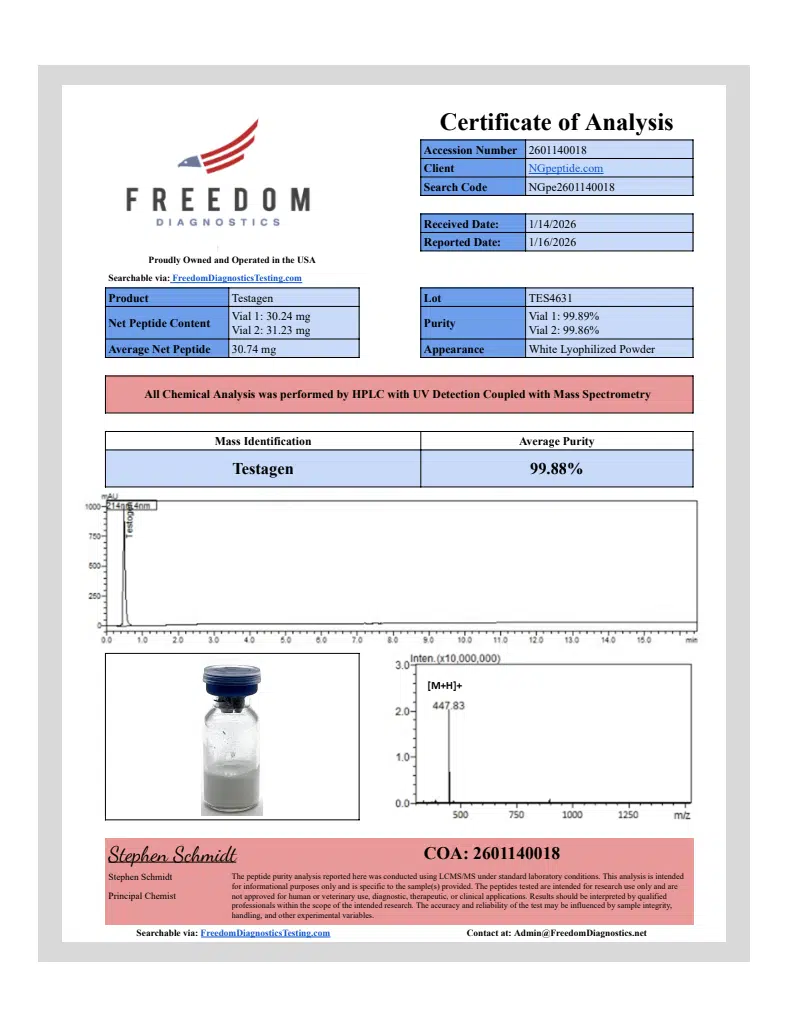
Testagen: Research Overview and Laboratory Information (USA)
Testagen is a synthetic peptide bioregulator studied in laboratory and experimental research involving cellular signaling, peptide communication pathways, and biological regulation systems. Within peptide science, bioregulators are investigated for their potential interactions with cellular processes associated with tissue-specific signaling and gene expression pathways.
In scientific and laboratory environments, Testagen has been explored as part of broader research into peptide-mediated cellular communication and biological regulation. Researchers in the United States and internationally continue to investigate peptide bioregulators because of growing interest in molecular signaling and age-related biological processes.
This material is intended strictly for laboratory and scientific research use only and is not approved for human consumption, medical treatment, or therapeutic application.
What Is Testagen?
Testagen is categorized as a peptide bioregulator used in experimental research involving cellular activity and molecular communication systems. Peptide bioregulators are short amino acid sequences studied for their potential role in influencing specific biological pathways within laboratory models.
In research environments, Testagen-related investigations commonly focus on:
- Cellular communication pathways
- Peptide signaling mechanisms
- Gene expression research
- Tissue-specific molecular studies
- Protein regulation systems
- Biological adaptation pathways
Researchers use peptide bioregulators to examine how signaling molecules may influence broader cellular activities.
Scientific and Research Applications
Testagen is used exclusively in controlled scientific and laboratory settings.
Research applications may include:
- Cellular signaling investigations
- Molecular communication pathway analysis
- Experimental peptide regulation studies
- Biological adaptation research
- Tissue-specific pathway models
- Protein interaction investigations
Laboratory research involving peptide bioregulators often examines how cellular systems respond to signaling compounds under controlled conditions.
Why Researchers Study Testagen
Scientific interest in peptide bioregulators has increased because cells communicate through intricate signaling networks involving proteins, peptides, and regulatory molecules.
Researchers frequently investigate:
- Cellular response systems
- Molecular signaling pathways
- Regulatory communication networks
- Gene activity studies
- Biological adaptation systems
- Peptide interaction mechanisms
These research efforts seek to improve understanding of cellular organization and signaling complexity.
Mechanism of Action (Research Context)
Within laboratory models, peptide bioregulators such as Testagen are investigated according to potential interactions with cellular communication systems.
Research observations may evaluate:
- Signaling pathway activity
- Cellular communication networks
- Protein interaction mechanisms
- Molecular regulation systems
- Experimental gene-related pathways
These findings remain part of ongoing scientific investigation and should not be interpreted as established medical outcomes.
Peptide Bioregulator Research
Peptide bioregulators represent a growing area within molecular biology and experimental science.
Researchers frequently study:
- Short peptide signaling systems
- Cellular communication patterns
- Tissue-specific pathway investigations
- Biological regulation networks
- Experimental molecular systems
Interest continues expanding as laboratory techniques improve.
Why Peptide Science Continues to Grow
Peptide research has become increasingly important because peptides play roles in communication between cells and biological systems.
Areas of interest include:
- Molecular signaling pathways
- Cellular regulation mechanisms
- Protein interaction studies
- Systems biology investigations
- Experimental pathway mapping
Peptide-based research contributes to broader understanding of biological communication systems.
Testagen and Cellular Research Models
Testagen Research
- Focuses on peptide bioregulation
- Examines cellular communication
- Supports molecular pathway studies
- Investigates signaling systems
Broader Biological Models
- Study wider physiological systems
- Include multiple signaling networks
- Evaluate complex interactions
- Examine broader biological responses
These distinctions help researchers select models appropriate for specific investigations.
Scientific Research Areas
Testagen research overlaps multiple scientific disciplines:
- Molecular biology
- Cellular science
- Peptide signaling research
- Experimental biochemistry
- Systems biology
- Regulatory pathway investigations
Continued advances in peptide science support expanding research opportunities.
Laboratory Handling and Storage
Proper laboratory handling helps support experimental consistency.
Suggested practices include:
- Store according to laboratory recommendations
- Reduce unnecessary environmental exposure
- Maintain sterile handling procedures
- Use appropriate research equipment
- Prevent contamination during preparation
- Follow institutional guidelines
Consistent handling methods support reliable outcomes.
Research Quality Standards
Research materials commonly undergo quality procedures designed to support reproducibility.
Examples include:
- Purity verification testing
- Batch consistency monitoring
- Documentation procedures
- Controlled production systems
- Standardized laboratory protocols
Quality measures help improve research reliability.
Regulatory Notice
Testagen is intended strictly for laboratory and scientific research purposes only. It is not approved by the FDA for human consumption, treatment, or therapeutic use.
This information is provided solely for educational and research reference purposes.
Summary
Testagen is a peptide bioregulator studied in laboratory environments for its potential role in cellular communication, signaling pathways, and biological regulation systems. Researchers continue investigating peptide-based systems to improve understanding of molecular interactions and cellular organization.
Ongoing scientific studies continue exploring how peptide signaling influences broader biological processes within controlled research environments.



Reviews
There are no reviews yet.