

Melanotan II (MT-2): Research Overview and Laboratory Information (USA)
Melanotan II (commonly referred to as MT-2) is a synthetic analog of alpha-melanocyte-stimulating hormone (α-MSH) that has been widely studied in dermatology research, pigmentation biology, and melanocortin receptor science. It belongs to the melanocortin peptide family and is primarily investigated for its interaction with melanocortin receptors involved in pigmentation, appetite regulation, and neuroendocrine signaling pathways.
In laboratory and research environments, MT-2 is studied for its effects on melanogenesis pathways, receptor binding activity, and cellular signaling mechanisms related to pigmentation and skin biology. Researchers in the United States and globally continue to explore Melanotan II as part of broader studies on melanocortin system regulation and pigment cell biology.
This compound is strictly intended for laboratory and scientific research use only and is not approved for human consumption, medical treatment, or therapeutic application.
What Is Melanotan II?
Melanotan II is a synthetic cyclic heptapeptide derived from melanocortin system research. It is structurally related to α-MSH and interacts with melanocortin receptors, particularly MC1R, which is heavily involved in pigmentation pathways.
In laboratory research, MT-2 is commonly studied for:
- Melanocortin receptor (MC1R, MC3R, MC4R) activation
- Melanogenesis (melanin production) pathway research
- Skin pigmentation signaling mechanisms
- UV-response and photobiology studies
- Neuroendocrine signaling pathway interactions
- Peptide receptor binding activity analysis
Because of its role in pigmentation biology, MT-2 is widely used in dermatological and cellular research models.
Scientific and Research Applications
Melanotan II is used exclusively in controlled laboratory environments for experimental research purposes. It is not intended for clinical or therapeutic use outside regulated scientific studies.
Key research applications include:
- Melanin production and pigmentation pathway studies
- Melanocyte signaling and activation research
- MC1R receptor binding and activation analysis
- UV-response and cellular protection modeling
- Neuroendocrine melanocortin system research
- Skin biology and pigment regulation studies
Researchers use MT-2 to better understand how melanocortin pathways regulate pigmentation and cellular responses to environmental stimuli.
Why Melanotan II Is Studied
Melanotan II has attracted significant scientific interest due to its interaction with melanocortin receptors and its influence on pigmentation-related biological pathways.
Researchers often study MT-2 in relation to:
- Skin pigmentation and melanogenesis research models
- Melanocortin receptor signaling systems
- UV-induced pigmentation response studies
- Neuroendocrine regulation of melanocyte activity
- Cellular adaptation to environmental stress factors
Its ability to activate pigmentation pathways makes it a key compound in dermatological and receptor biology research.
Mechanism of Action (Research Context)
In laboratory studies, Melanotan II acts as an agonist of melanocortin receptors, especially MC1R, which is directly involved in regulating melanin production in melanocytes. It also interacts with other melanocortin receptors involved in neuroendocrine signaling.
Key research observations include:
- Activation of MC1R receptors in melanocytes
- Stimulation of melanogenesis signaling pathways
- Modulation of skin pigmentation gene expression
- Interaction with hypothalamic melanocortin systems
- Influence on neuroendocrine receptor networks
These mechanisms are studied strictly in controlled scientific environments and are not confirmed for clinical use.
Why Melanotan II Is Popular in Scientific Research
Melanotan II continues to be widely studied due to its strong interaction with pigmentation pathways and melanocortin receptor systems.
Researchers frequently explore MT-2 in relation to:
- Pigmentation biology and melanin regulation
- UV-response and photoprotection models (experimental)
- MC1R receptor signaling studies
- Skin biology and melanocyte activation research
- Neuroendocrine melanocortin system pathways
Its direct role in melanin production pathways makes it a central compound in pigmentation research.
Melanotan II vs Other Melanocortin Peptides
Melanotan II is often compared with other melanocortin peptides due to its receptor activity and pigmentation effects.
Melanotan II (MT-2)
- Strong MC1R receptor activation
- Direct influence on melanin production pathways
- Broad melanocortin receptor interaction
- Focus on pigmentation and skin biology research
Other Melanocortin Peptides
- May focus on metabolic or appetite regulation pathways
- Less direct pigmentation activity
- More selective receptor targeting profiles
This makes MT-2 one of the most studied peptides in pigmentation research.
Scientific Research Context
Melanotan II is part of a broader category of melanocortin peptides studied in dermatology, molecular biology, and neuroendocrine research.
Areas of scientific interest include:
- Melanocyte biology and pigmentation pathways
- Melanocortin receptor signaling systems
- UV-response and skin adaptation mechanisms
- Neuroendocrine hormone regulation research
- Cellular signaling and gene expression studies
- Skin protection and photobiology research
Ongoing research continues to explore how melanocortin pathways regulate pigmentation and skin biology.
Laboratory Handling and Storage
Proper handling is essential to maintain stability and research integrity in laboratory environments.
Recommended guidelines include:
- Store in a cool, dry environment
- Avoid exposure to heat and sunlight
- Maintain sterile laboratory conditions
- Use research-grade handling equipment
- Prevent contamination during preparation
- Follow standard peptide storage protocols
These practices ensure reliability in scientific research applications.
Research Quality Standards
In laboratory supply environments, consistency and verification are critical for reproducible results.
Key quality standards include:
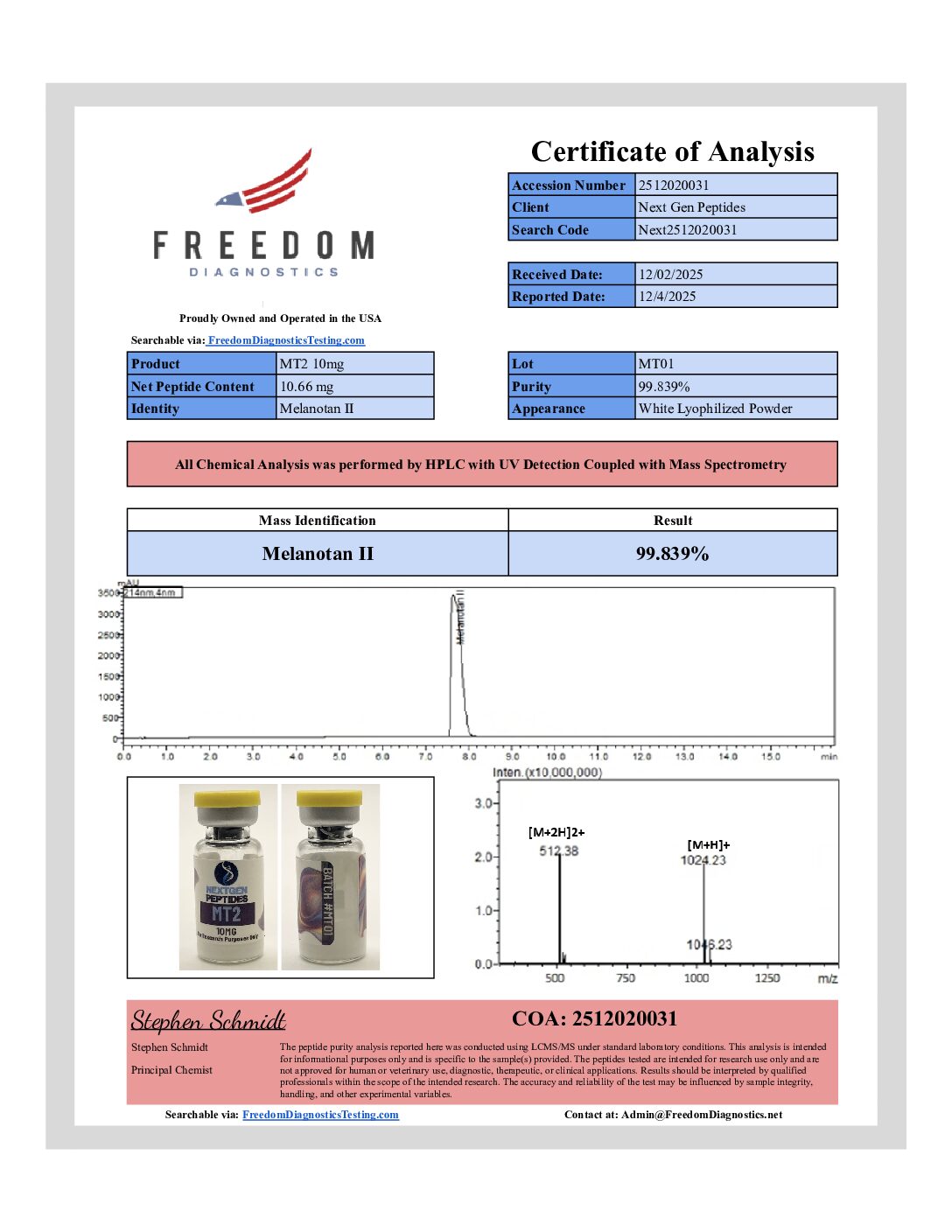
- Verified peptide purity and composition analysis
- Third-party COA documentation
- Batch-to-batch consistency for research reliability
- Controlled manufacturing processes
- Secure and compliant distribution systems
These standards ensure accuracy and reproducibility in pigmentation research studies.
Regulatory Notice
Melanotan II (MT-2) is intended strictly for laboratory and scientific research purposes only. It is not approved by the FDA for human consumption, medical treatment, or therapeutic use.
All information provided is for educational and research reference within controlled laboratory environments.
Summary
Melanotan II (MT-2) is a synthetic melanocortin peptide widely studied in pigmentation and dermatology research for its role in MC1R receptor activation and melanin production pathways. Its strong influence on melanogenesis makes it a key compound in skin biology and melanocortin system research.
Ongoing scientific investigation continues to explore its effects on pigmentation signaling, melanocyte activity, and neuroendocrine melanocortin pathways in controlled laboratory settings.



Reviews
There are no reviews yet.