
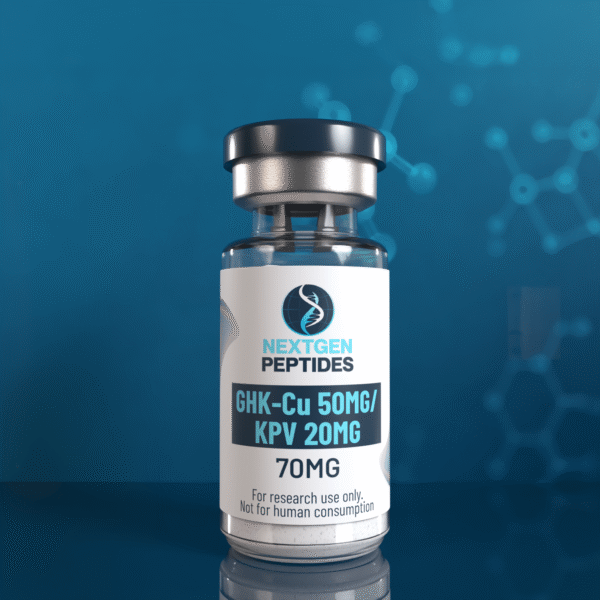
GHK-Cu / KPV Blend: Research Overview and Laboratory Information (USA)
The GHK-Cu and KPV blend is a combination of two bioactive peptides widely studied in cosmetic science, immunology, and cellular biology research. Each peptide plays a distinct role in biological signaling systems, and together they are investigated for their potential involvement in skin regeneration pathways, inflammatory response modulation, and tissue repair mechanisms in controlled laboratory environments.
Researchers in the United States and globally continue to explore peptide combinations like GHK-Cu and KPV to better understand how skin biology, immune signaling, and cellular communication systems interact at the molecular level.
This blend is strictly intended for laboratory and scientific research use only and is not approved for human consumption, medical treatment, or therapeutic application.
What Is GHK-Cu?
GHK-Cu (glycyl-L-histidyl-L-lysine copper complex) is a naturally occurring copper-binding tripeptide found in human plasma, saliva, and urine. It is widely studied in regenerative biology and cosmetic science due to its role in cellular repair and extracellular matrix regulation.
In laboratory research, GHK-Cu is commonly studied for:
- Collagen synthesis and extracellular matrix remodeling
- Skin regeneration and dermal repair pathways
- Wound healing and tissue recovery models
- Anti-inflammatory and antioxidant signaling pathways
- Gene expression regulation in skin cells
- Fibroblast activity and connective tissue research
Because of its natural presence in human biology, GHK-Cu is frequently used in skin and regenerative research models.
What Is KPV?
KPV is a tripeptide fragment derived from alpha-melanocyte-stimulating hormone (α-MSH). It is widely studied in immunology and inflammation research due to its potential role in modulating immune response pathways.
In laboratory research, KPV is commonly studied for:
- Anti-inflammatory signaling pathway research
- Immune response regulation studies
- Cytokine activity modulation models
- Gut and epithelial barrier research
- Cellular stress response pathways
- Immune cell communication systems
KPV is primarily investigated in models focused on inflammation control and immune system balance.
Scientific and Research Applications of the GHK-Cu / KPV Blend
The combination of GHK-Cu and KPV is of scientific interest due to their complementary biological roles in skin regeneration and immune regulation pathways.
Key research applications include:
- Skin repair and tissue regeneration studies
- Inflammatory response regulation models
- Extracellular matrix and collagen remodeling research
- Immune-skin interaction pathway studies
- Cellular protection and oxidative stress response
- Wound healing and epithelial recovery models
Researchers use this blend to explore how structural tissue repair and immune regulation pathways may interact in biological systems.
Why the GHK-Cu / KPV Blend Is Studied
The combination of these two peptides is studied due to their overlapping roles in inflammation control and tissue regeneration systems.
Researchers often explore this blend in relation to:
- Skin aging and regenerative biology models
- Chronic inflammation pathway research
- Immune modulation and cytokine signaling
- Tissue repair and cellular recovery systems
- Barrier function and epithelial protection studies
This makes the blend relevant in both cosmetic science and immunological research.
Mechanism of Action (Research Context)
In laboratory studies, GHK-Cu and KPV are believed to influence multiple biological signaling systems involved in tissue repair, immune modulation, and cellular communication.
Key research observations include:
- GHK-Cu activation of collagen and extracellular matrix pathways
- Copper-dependent regulation of antioxidant systems
- KPV modulation of inflammatory cytokine signaling
- Immune response balance through peptide signaling pathways
- Combined influence on cellular repair and regeneration systems
These mechanisms are studied strictly in controlled scientific environments and are not confirmed for clinical use.
Why This Blend Is Popular in Scientific Research
The GHK-Cu / KPV blend continues to attract attention in regenerative science and immunology research due to its dual-action biological pathways.
Researchers frequently explore it in relation to:
- Skin regeneration and cosmetic biology studies
- Inflammation and immune response research
- Wound healing and tissue repair models
- Oxidative stress and antioxidant defense systems
- Cellular communication and repair signaling pathways
Its combined biological activity makes it useful in multi-pathway research models.
GHK-Cu vs KPV in Research Models
GHK-Cu (Copper Peptide)
- Focus on skin regeneration and collagen production
- Extracellular matrix and tissue remodeling research
- Antioxidant and gene expression regulation
- Strong role in cosmetic and dermal biology
KPV Peptide
- Focus on immune and inflammation regulation
- Cytokine signaling and immune balance
- Gut and epithelial barrier research
- Anti-inflammatory pathway studies
Together, they provide a dual-system research model combining skin repair and immune modulation pathways.
Scientific Research Context
The GHK-Cu / KPV blend belongs to a broader category of experimental peptides studied in regenerative medicine, immunology, and molecular biology.
Areas of scientific interest include:
- Skin biology and extracellular matrix research
- Immune system regulation and inflammation control
- Cellular repair and regeneration pathways
- Oxidative stress response mechanisms
- Epithelial barrier function studies
- Peptide signaling and gene expression regulation
Ongoing research continues to explore how peptide combinations influence interconnected biological systems.
Laboratory Handling and Storage
Proper handling is essential to maintain stability and reliability in research environments.
Recommended guidelines include:
- Store in a cool, dry environment
- Avoid heat and direct sunlight exposure
- Maintain sterile laboratory conditions
- Use research-grade handling equipment
- Prevent contamination during preparation
- Follow standard peptide storage protocols
These practices ensure sample integrity for scientific research applications.
Research Quality Standards
In laboratory supply environments, consistency and verification are essential for reproducible results.
Key quality standards include:
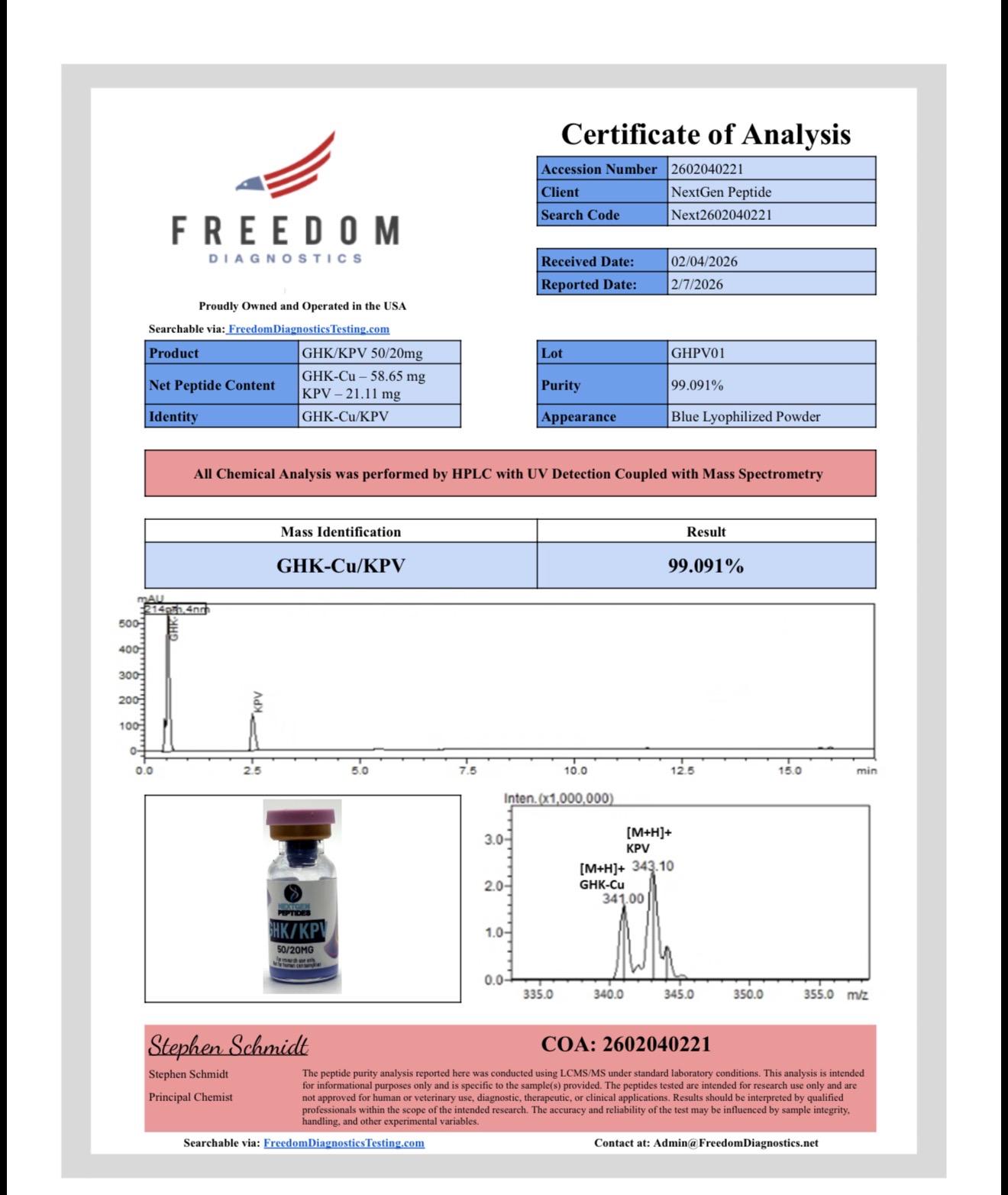
- Verified peptide purity and composition analysis
- Third-party COA documentation
- Batch-to-batch consistency for reliable research
- Controlled manufacturing processes
- Secure and compliant distribution systems
These standards ensure accuracy and reliability in peptide research studies.
Regulatory Notice
The GHK-Cu / KPV blend is intended strictly for laboratory and scientific research purposes only. It is not approved by the FDA for human consumption, medical treatment, or therapeutic use.
All information provided is for educational and research reference within controlled laboratory environments.
Summary
The GHK-Cu / KPV blend is widely studied in cosmetic science and immunology research for its roles in skin regeneration, inflammation control, and cellular repair pathways. Its combination of copper peptide activity and immune-modulating signaling makes it a valuable subject in regenerative biology and inflammatory response studies.
Ongoing scientific investigation continues to explore its effects on tissue repair, immune balance, and cellular communication systems in controlled laboratory settings.
Reviews
There are no reviews yet.