
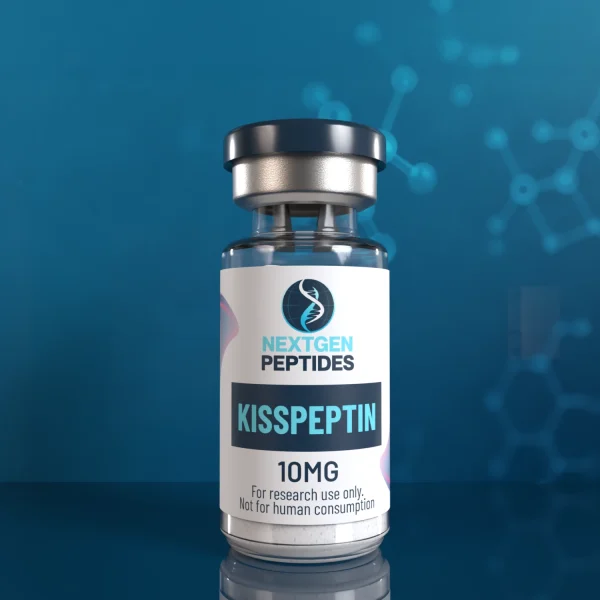
Kisspeptin: Research Overview and Laboratory Information (USA)
Kisspeptin is a naturally occurring neuropeptide that plays a central role in reproductive hormone regulation and endocrine signaling pathways. It has been widely studied in endocrinology, reproductive biology, and neuroendocrine research for its influence on the hypothalamic-pituitary-gonadal (HPG) axis and its role in initiating puberty and regulating reproductive hormone secretion.
Researchers in the United States and worldwide continue to investigate kisspeptin in controlled laboratory environments to better understand how it regulates reproductive function, hormone signaling, and fertility-related biological pathways.
This compound is strictly intended for laboratory and scientific research use only and is not approved for human consumption, medical treatment, or therapeutic application.
What Is Kisspeptin?
Kisspeptin is a peptide encoded by the KISS1 gene and is essential in regulating reproductive hormone signaling. It acts as an upstream regulator of gonadotropin-releasing hormone (GnRH), which plays a key role in reproductive function and endocrine system development.
In laboratory research, kisspeptin is commonly studied for:
- Regulation of GnRH secretion pathways
- Hypothalamic-pituitary-gonadal (HPG) axis signaling
- Puberty initiation and reproductive development models
- Fertility and reproductive hormone regulation research
- Neuroendocrine communication systems
- Hormonal feedback loop studies
Because of its central role in reproductive biology, kisspeptin is considered a key peptide in endocrine and fertility research.
Scientific and Research Applications
Kisspeptin is used exclusively in controlled laboratory environments for experimental research purposes. It is not intended for clinical or therapeutic use outside regulated scientific studies.
Key research applications include:
- Reproductive hormone signaling pathway analysis
- GnRH neuron activation and regulation studies
- Fertility and reproductive system modeling
- Puberty and developmental biology research
- Endocrine feedback loop investigations
- Hormonal communication system studies
Researchers use kisspeptin to understand how reproductive hormones are regulated at the molecular and cellular levels.
Why Kisspeptin Is Studied in Research
Kisspeptin has become a major focus in reproductive biology due to its direct role in controlling the release of GnRH and regulating reproductive hormone cascades.
Researchers often study kisspeptin in relation to:
- Puberty onset and hormonal development
- Fertility regulation and reproductive signaling
- Hypothalamic hormone control systems
- Menstrual cycle and reproductive rhythm research
- Endocrine system maturation and function
Its critical role in reproductive hormone activation makes it essential in endocrine research.
Mechanism of Action (Research Context)
In laboratory studies, kisspeptin is believed to act by binding to the KISS1 receptor (GPR54), which triggers downstream activation of GnRH neurons in the hypothalamus. This signaling cascade ultimately influences reproductive hormone release.
Key research observations include:
- Activation of GnRH secretion pathways
- Regulation of luteinizing hormone (LH) and follicle-stimulating hormone (FSH)
- Influence on reproductive hormone feedback loops
- Modulation of hypothalamic signaling networks
- Coordination of endocrine reproductive axis activity
These mechanisms are studied strictly in controlled scientific environments and are not confirmed for clinical use.
Why Kisspeptin Is Popular in Scientific Research
Kisspeptin continues to be widely studied due to its essential role in reproductive hormone regulation and fertility signaling pathways.
Researchers frequently explore kisspeptin in relation to:
- Fertility and reproductive health modeling (experimental)
- Puberty and developmental hormone studies
- Endocrine system regulation research
- Hypothalamic signaling pathway analysis
- Hormonal balance and reproductive axis studies
Its central role in reproductive hormone control makes it a cornerstone of endocrine research.
Kisspeptin vs Other Neuroendocrine Peptides
Kisspeptin is often compared with other neuroendocrine peptides due to its upstream regulatory role in reproductive hormone systems.
Kisspep (KISS1 Peptide)
- Direct regulator of GnRH signaling
- Controls reproductive hormone cascade initiation
- Central role in puberty and fertility regulation
- Strong hypothalamic-pituitary axis involvement
Other Neuroendocrine Peptides
- May regulate downstream hormonal responses
- Often target secondary signaling systems
- Limited control over reproductive axis initiation
This makes kisspeptin one of the most important upstream regulators in reproductive endocrinology.
Scientific Research Context
Kisspep is part of a broader category of neuroendocrine peptides studied in reproductive biology, hormone regulation, and developmental endocrinology research.
Areas of scientific interest include:
- Reproductive hormone signaling systems
- Hypothalamic-pituitary-gonadal axis regulation
- Puberty and developmental biology pathways
- Fertility and reproductive function studies
- Endocrine feedback loop modeling
- Neuroendocrine communication research
Ongoing studies continue to explore how kisspeptin controls reproductive hormone systems and developmental processes.
Laboratory Handling and Storage
Proper handling is essential to maintain stability and reliability in research environments.
Recommended guidelines include:
- Store in a cool, dry environment
- Avoid exposure to heat and direct sunlight
- Maintain sterile laboratory conditions
- Use research-grade handling equipment
- Prevent contamination during preparation
- Follow standard peptide storage protocols
These practices ensure sample integrity for scientific research applications.
Research Quality Standards
In laboratory supply environments, consistency and verification are critical for reproducible results.
Key quality standards include:
- Verified peptide purity and composition analysis
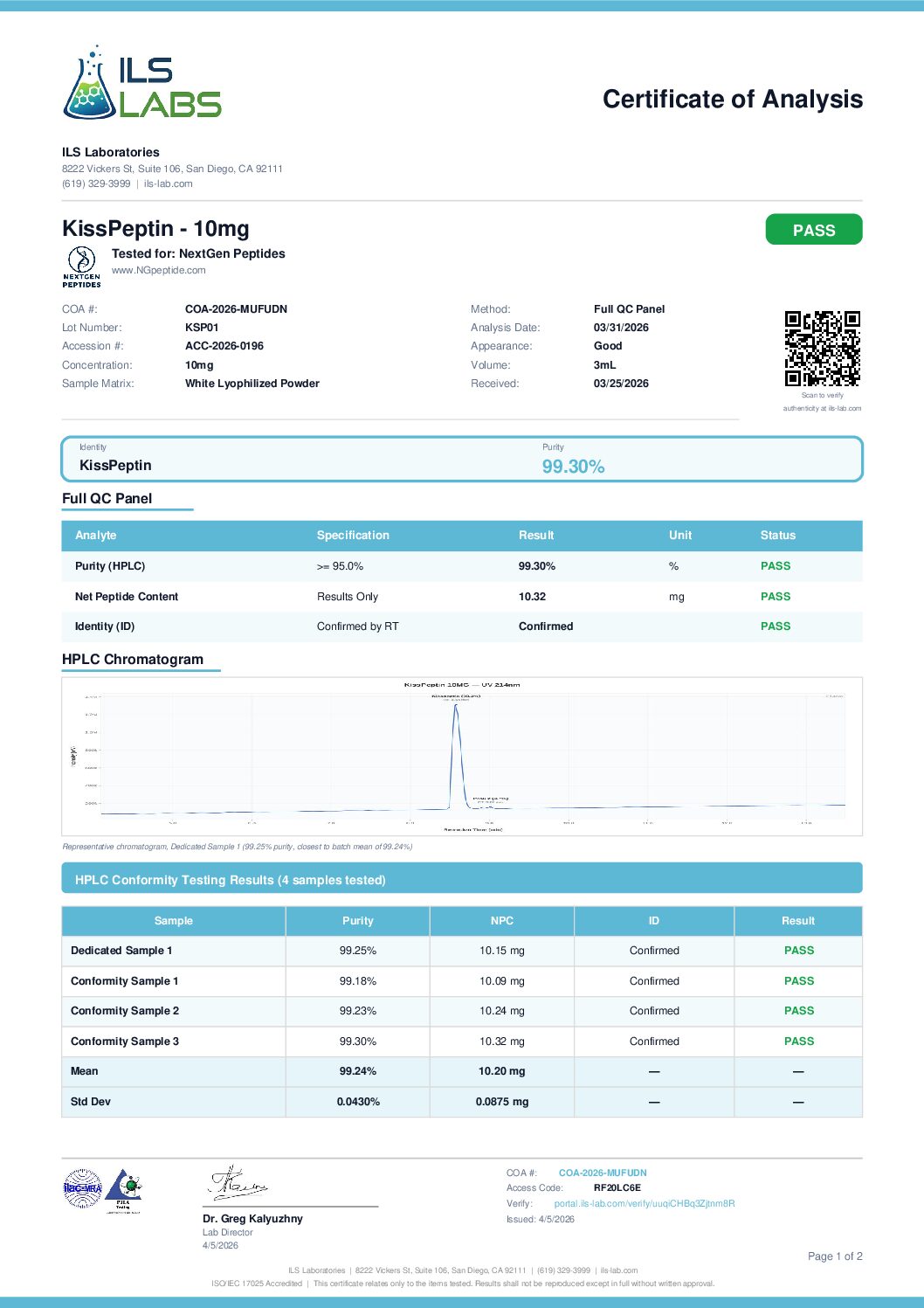
- Third-party COA documentation
- Batch-to-batch consistency for research reliability
- Controlled manufacturing processes
- Secure and compliant distribution systems
These standards ensure accuracy and reliability in endocrine research studies.
Regulatory Notice
Kisspep is intended strictly for laboratory and scientific research purposes only. It is not approved by the FDA for human consumption, medical treatment, or therapeutic use.
All information provided is for educational and research reference within controlled laboratory environments.
Summary
is a key neuroendocrine peptide widely studied in reproductive biology for its role in GnRH activation, hormonal signaling, and regulation of the hypothalamic-pituitary-gonadal axis. Its function as an upstream regulator of reproductive hormones makes it one of the most important peptides in fertility and endocrine research.
Ongoing scientific investigation continues to explore its effects on reproductive hormone regulation, developmental biology, and neuroendocrine signaling systems in controlled laboratory environments.



Reviews
There are no reviews yet.