
BPC & TB Blend (BPC-157 + TB-500): Research Overview and Laboratory Information (USA)
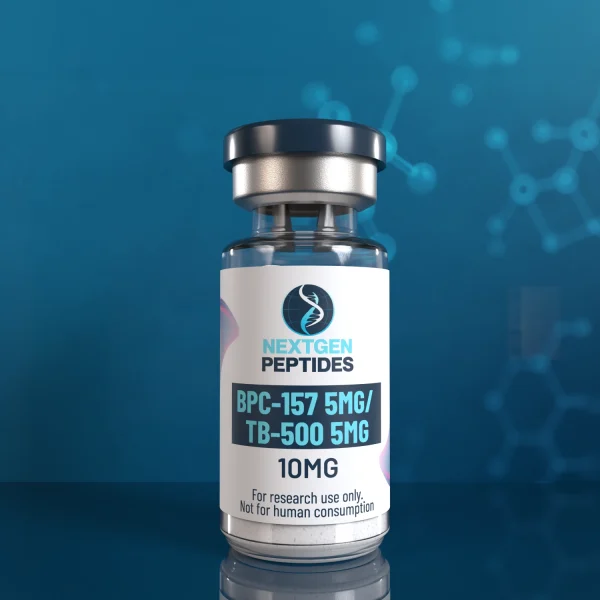
The BPC & TB Blend, commonly referenced as a combination of BPC-157 and TB-500, is widely studied in peptide research environments for its potential role in tissue regeneration pathways, cellular repair mechanisms, and biological signaling systems. Researchers in the United States and globally continue to investigate this peptide combination in controlled laboratory settings focused on regenerative biology, connective tissue research, and cellular communication models.
This blend is of particular interest in experimental peptide science due to the complementary nature of its components, which are studied individually and in combination for their potential interaction in biological repair and recovery-related signaling pathways.
This product is strictly intended for laboratory and scientific research use only and is not approved for human consumption, medical treatment, or therapeutic use.
What Is the BPC & TB Blend?
The BPC & TB Blend combines two well-known research peptides:
- BPC-157 (Body Protection Compound-157)
- TB-500 (Thymosin Beta-4 fragment)
In laboratory research, these compounds are studied separately and together to evaluate their roles in cellular repair, tissue signaling, and regenerative biology pathways.
BPC-157 (Research Context)
BPC-157 is a synthetic peptide studied for its role in tissue-related signaling mechanisms, particularly in connective tissue and cellular repair models.
TB-500 (Research Context)
TB-500 is a peptide fragment associated with thymosin beta-4, studied for its involvement in cell migration, tissue regeneration signaling, and biological repair pathways.
Scientific Research Applications
The BPC & TB Blend is used exclusively in controlled laboratory environments for experimental and investigative purposes.
Key research applications include:
- Cellular regeneration and repair pathway studies
- Tissue signaling and biological communication research
- Connective tissue modeling and response analysis
- Angiogenesis and cell migration studies
- Inflammation-related signaling pathway research
- Peptide interaction and synergy modeling
Researchers use this blend to explore how peptide combinations may influence complex biological repair systems in experimental models.
Why Researchers Study BPC & TB Together
One of the main reasons this blend is studied is the potential for peptide synergy. In scientific research, synergy refers to how multiple compounds may interact to produce combined effects in biological systems that differ from individual performance.
Researchers often evaluate the BPC & TB Blend in relation to:
- Combined tissue repair signaling pathways
- Cellular migration and regeneration modeling
- Multi-peptide interaction systems
- Structural tissue response research
- Regenerative biology simulation studies
The combination is frequently included in experimental protocols exploring how peptides may interact within broader biological networks.
Mechanisms Studied in Research Settings
In laboratory environments, the BPC & TB Blend is analyzed for its potential influence on multiple biological pathways related to tissue communication and cellular response systems.
Proposed research mechanisms include:
- Modulation of cellular signaling pathways
- Support of tissue repair communication systems
- Influence on endothelial and connective tissue models
- Regulation of cell migration processes
- Interaction with inflammatory signaling pathways
- Activation of regenerative biological responses
These mechanisms are strictly studied in controlled scientific environments and are not confirmed for medical use.
Why the BPC & TB Blend Is Popular in Research
The BPC & TB Blend remains one of the most frequently discussed combinations in peptide research due to its broad applications in regenerative science.
Researchers commonly study it in relation to:
- Tissue regeneration and repair models
- Musculoskeletal research systems
- Cellular recovery signaling pathways
- Injury response simulations in lab environments
- Peptide synergy and interaction studies
- Regenerative biology and bio-signaling research
Its popularity is driven by ongoing interest in how peptides may influence complex biological recovery systems.
BPC & TB Blend vs Individual Peptides
Researchers often compare the blend to individual peptide studies to evaluate differences in biological response.
Individual Peptides
- Studied separately in isolated biological pathways
- Focus on single-mechanism activity
- Limited interaction modeling
Combined BPC & TB Blend
- Evaluated for peptide synergy effects
- Multi-pathway biological interaction studies
- Broader regenerative modeling applications
- Enhanced complexity in signaling research
This makes the blend useful for comparative peptide interaction studies.
Scientific Research Context
The BPC & TB Blend is part of a broader category of experimental peptides studied in regenerative biology, cellular communication research, and tissue signaling science.
Areas of scientific interest include:
- Cellular repair and regeneration systems
- Peptide-based communication pathways
- Tissue response and recovery modeling
- Angiogenesis and structural biology research
- Inflammation and repair signaling studies
- Advanced peptide synergy investigations
Research continues to evolve as scientists explore how peptides interact in complex biological systems.
Laboratory Handling and Storage
Proper handling is essential to maintain stability and consistency in laboratory research environments.
Recommended guidelines include:
- Store in a cool, controlled environment
- Avoid exposure to heat and direct sunlight
- Maintain sterile laboratory conditions
- Use research-grade equipment and protocols
- Prevent contamination during handling
- Follow standard peptide storage procedures
These practices help preserve sample integrity in scientific research applications.
Research Quality Standards
In laboratory supply environments, quality standards are critical for reproducible results.
Common quality expectations include:
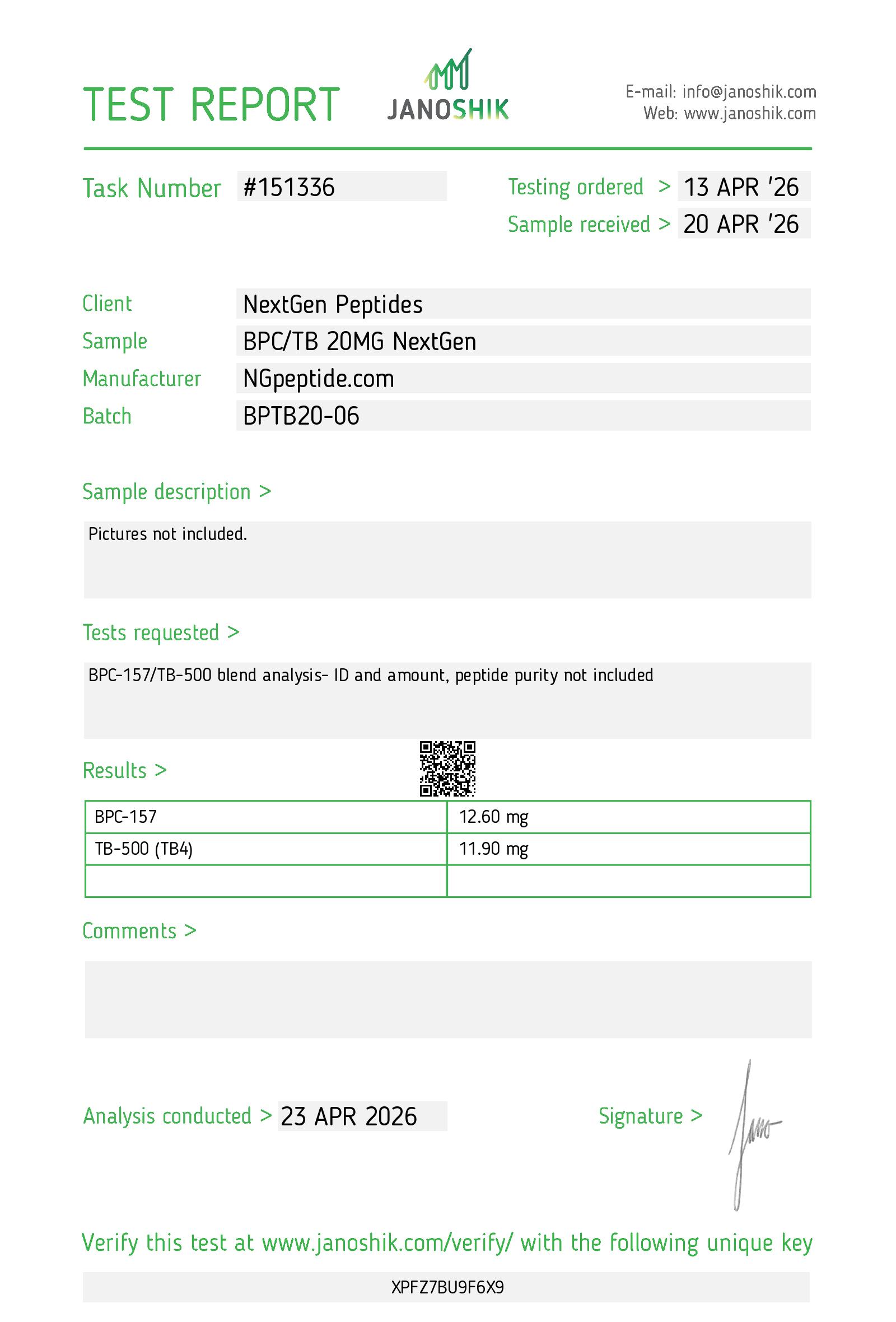
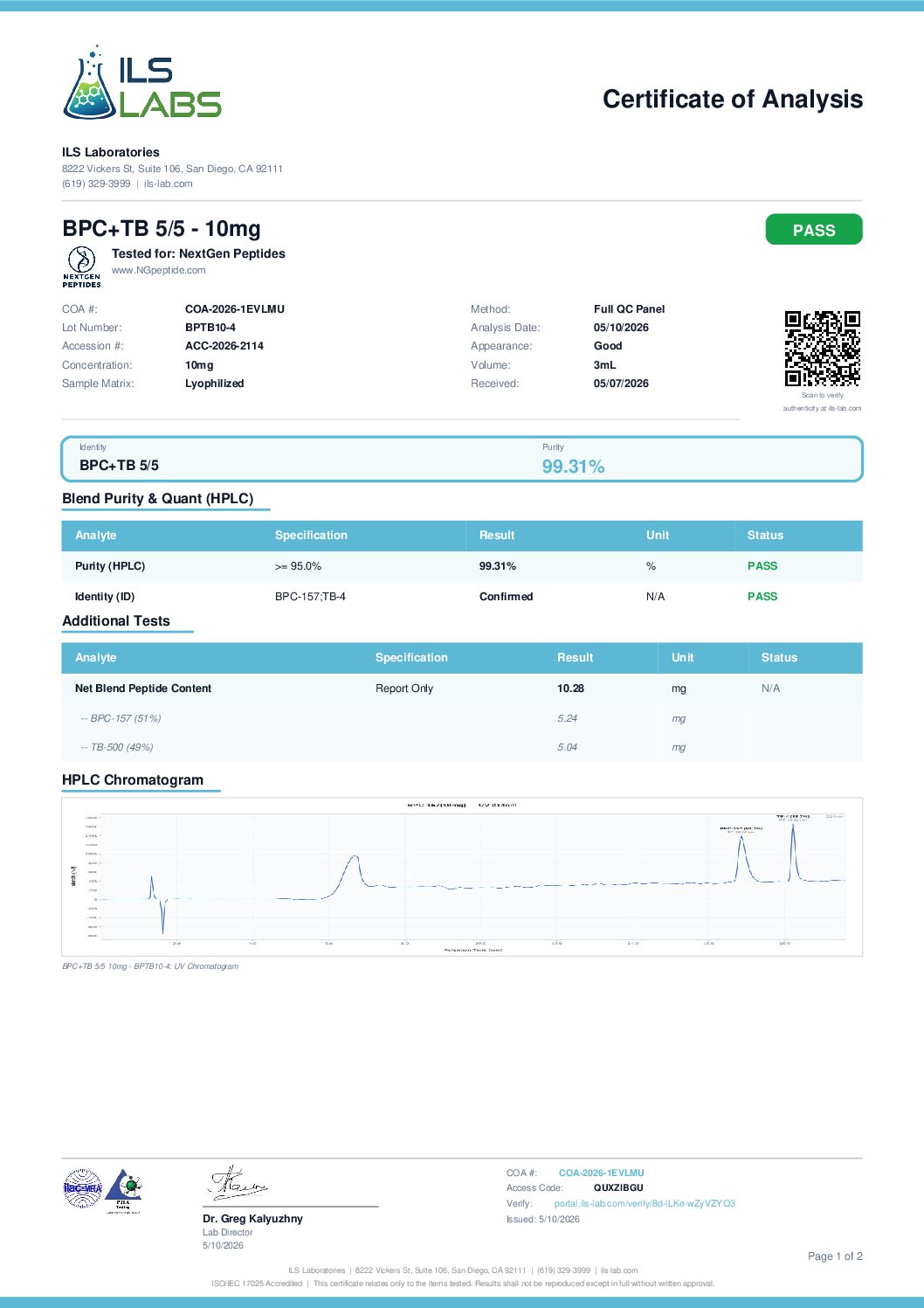
- Verified purity and composition analysis
- Third-party testing and documentation (COA)
- Batch consistency for repeatable research
- Controlled manufacturing processes
- Secure and compliant distribution
These standards ensure reliability in peptide research workflows.
Regulatory Notice
The BPC & TB Blend is intended strictly for laboratory and research purposes only. It is not approved by the FDA for human consumption, medical use, or therapeutic applications.
All information provided is for educational and scientific reference within controlled research environments.
Summary
The BPC & TB Blend (BPC-157 + TB-500) is widely studied in peptide science for its potential role in tissue regeneration, cellular signaling, and biological repair mechanisms. Its combination-based structure makes it a valuable subject in regenerative biology research and peptide interaction studies.
Ongoing scientific investigations continue to explore how these peptides may interact in complex biological systems under controlled laboratory conditions.


Reviews
There are no reviews yet.